About Solar Cooker Model
Solar Cooker Model
Samtech Instruments is a leading manufacturer, supplier, and exporter of Solar Cooker Models, designed to demonstrate the practical application of solar energy for cooking and heating. This educational model helps students understand how sunlight can be converted into thermal energy using the greenhouse effect and heat absorption principles.
Widely used in schools, colleges, STEM laboratories, and science exhibitions, the Solar Cooker Model promotes awareness of renewable energy and sustainable living practices.
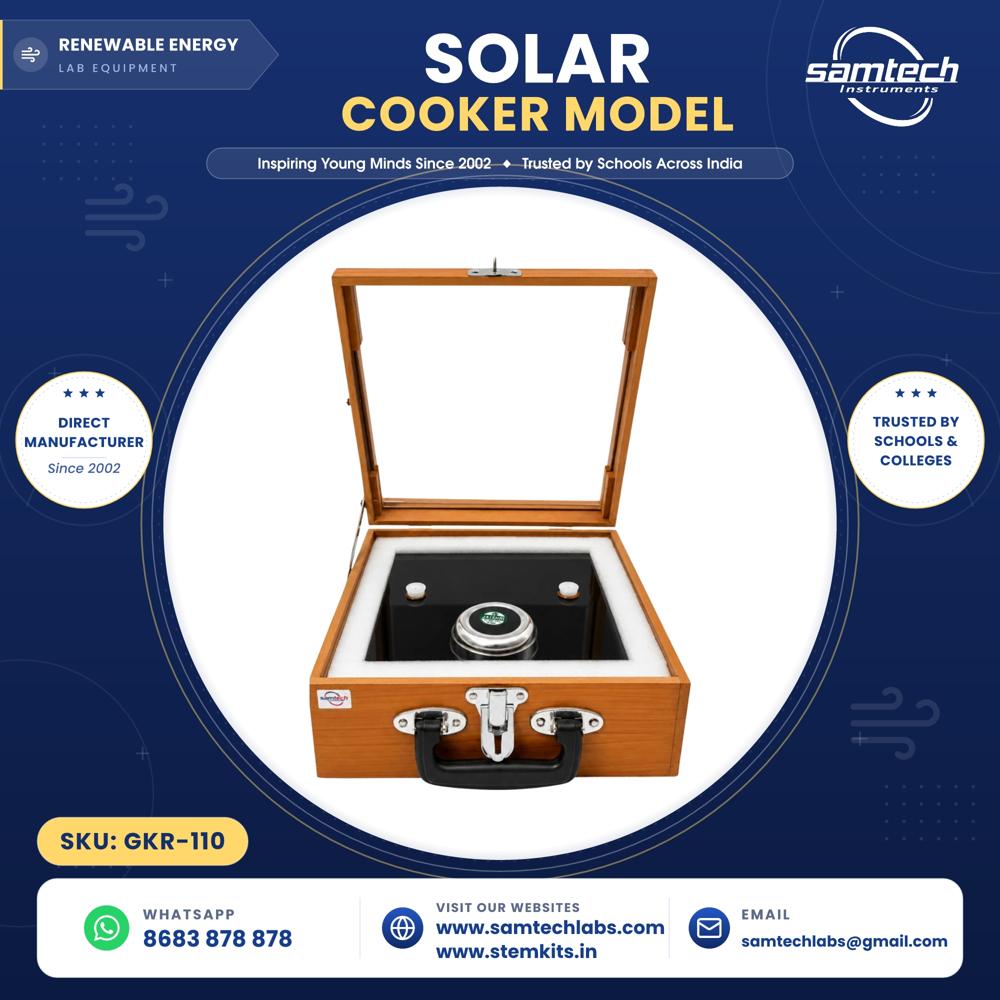
Efficient Solar Cooking DemonstrationShowcase the power of renewable energy with the GKR-110 Solar Cooker Model. Designed to maximize heat retention and sunlight concentration, its flat aluminum foil reflectors and insulated chamber are tailored for clear and effective demonstrations-making science practical and engaging for learners aged 8 and above.
Built for Classroom and Practical UseConstructed for regular handling, the model is lightweight yet durable, featuring smooth, reflective surfaces and a sturdy frame. Its convenient size and easy assembly make it perfect for classrooms, labs, and science exhibitions, fostering hands-on learning and group activities.
Safe, Portable & Environmentally FriendlyWith no electrical parts or open flames, the GKR-110 offers a safe way to explore solar energy. Portability and easy maintenance-requiring only a dry cloth to clean-add to its appeal as an educational resource. Encourage eco-friendly learning while illustrating real-world applications of solar technology.
FAQ's of Solar Cooker Model:
Q: How does the GKR-110 Solar Cooker Model harness solar energy for cooking demonstrations?
A: The model uses flat aluminum foil reflectors to focus sunlight into the insulated cooking chamber. The transparent lid allows sunlight in while trapping heat, enabling the model to reach temperatures up to 80C under ideal conditions. This process vividly demonstrates solar energy conversion into heat.
Q: What steps are involved in assembling the solar cooker for classroom use?
A: Assembly is manual and straightforward, involving fitting the high-quality cardboard frame, attaching the aluminum foil reflectors, and placing the thermal insulated cooking chamber with its transparent lid. The included instructions guide users through each step, making it suitable for hands-on learning and group activities.
Q: When is the best time to use the solar cooker for effective demonstrations?
A: For optimal performance, use the model during midday or when sunlight is strongest, preferably on clear days. This ensures sufficient sunlight reaches the reflectors, allowing the cooking chamber to heat efficiently and maximize demonstration effectiveness.
Q: Where can this solar cooker model be most effectively utilized?
A: It is ideally suited for science classrooms, school labs, and renewable energy exhibitions. It can also be used for home experiments or outdoor educational events, as long as direct sunlight is available for accurate demonstration of solar cooking principles.
Q: What can be cooked or demonstrated using the GKR-110 Solar Cooker Model?
A: The model is primarily intended for educational purposes. You can demonstrate the heating or cooking of small food items (like melting chocolate or heating water) to illustrate solar energy principles. It is not recommended for preparing full meals or large quantities of food.
Q: How do you clean and maintain the solar cooker model after use?
A: Maintenance is simple: just wipe the surfaces with a dry cloth to keep the reflectors, lid, and frame clean. Regular gentle cleaning ensures maximum reflection of sunlight and a clear view through the lid, maintaining efficiency for repeated classroom use.
Q: What are the primary benefits of using this solar cooker model in education?
A: The GKR-110 model offers a safe, hands-on way to illustrate solar energy concepts. It is cost-effective, eco-friendly, and portable, encouraging interactive learning about renewable energy, heat transfer, and sustainability while minimizing safety risks found in traditional cooking demonstrations.
 Send Inquiry



 Send Inquiry

 Send Inquiry