Solar & lunar Eclipse Model About
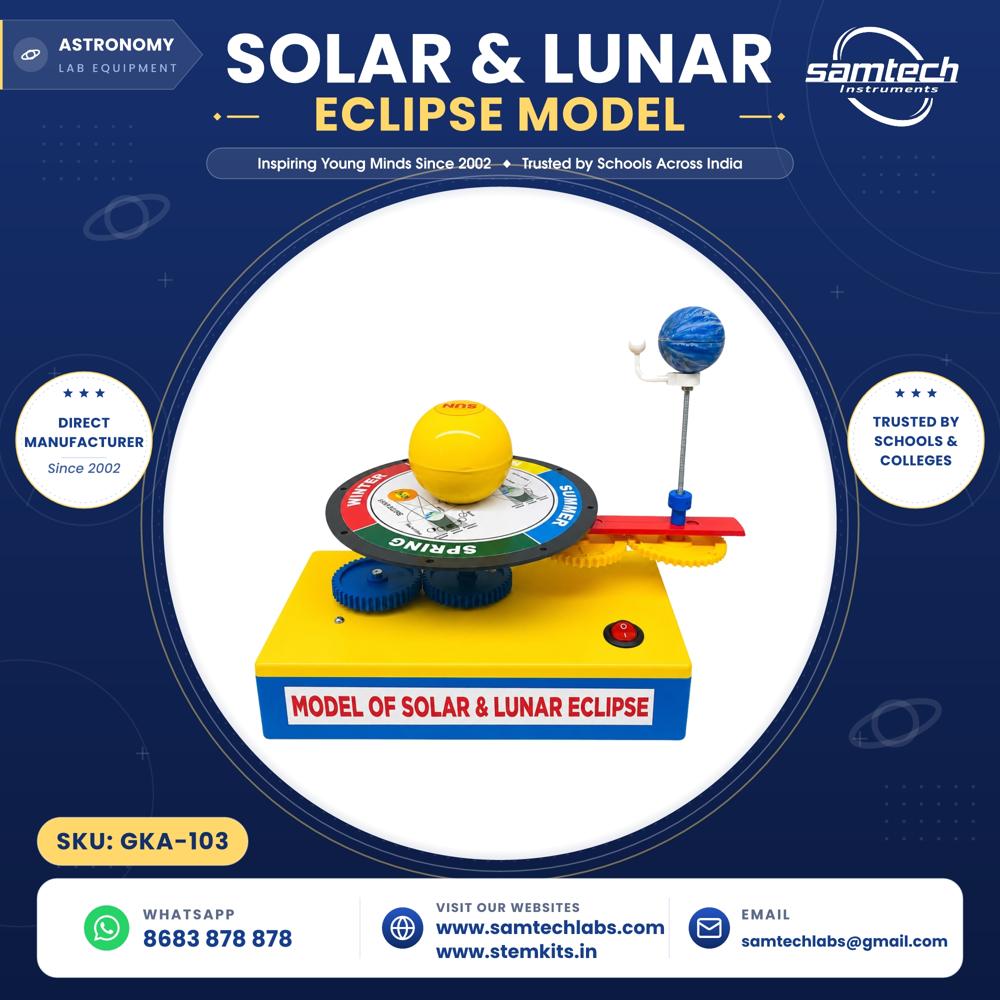
Clear and Interactive Eclipse DemonstrationsUsing the Solar & Lunar Eclipse Model, students can easily visualize and understand the mechanics of both solar and lunar eclipses. By manually rotating the arms, teachers can adjust the positioning of the Sun, Earth, and Moon, highlighting the phases where eclipses occur. This hands-on approach reinforces theoretical concepts presented in class and inspires curiosity about celestial phenomena.
Safe, Durable, and Classroom-ReadySafety and durability are central to this model's design. Manufactured from high quality, non-toxic materials, the model ensures child-safe interaction for users aged 8 and above. Its robust construction, smooth glossy surface, and secure tabletop display mode make it suitable for everyday classroom use. Maintenance is straightforward-simply wipe down with a dry cloth for easy care.
FAQ's of Solar & lunar Eclipse Model:
Q: How does the model demonstrate solar and lunar eclipses?
A: By manually rotating the arms connected to the Earth, Sun, and Moon, users can adjust their positions to accurately simulate both solar and lunar eclipse phases, showing when and how these events occur in space.
Q: What materials is the eclipse model made from, and is it safe for students?
A: The model is constructed from high-quality plastic and metal components that are non-toxic and safe for children, making it ideal for classroom environments and educational use.
Q: When should the Solar & Lunar Eclipse Model be used in the classroom?
A: This model is especially useful during astronomy lessons, science demonstrations, and project-based learning sessions when teaching about eclipses, celestial movements, or the solar system.
Q: Where can the model be displayed for educational activities?
A: Designed for tabletop display, the model fits standard classroom desks and laboratory tables, making it convenient for group demonstrations and hands-on learning experiences.
Q: What is the process for operating the model to show different eclipse phases?
A: Simply use your hand to rotate the manual arms attached to each celestial sphere. Adjust the Moon and Earth into various alignments with the Sun to visualize both partial and total eclipse scenarios.
Q: How does the model benefit students' learning experience?
A: It provides a tangible, hands-on way to explore the mechanics of eclipses, making abstract astronomical concepts more concrete and engaging for students of different ages.
Q: What maintenance does the eclipse model require for long-lasting use?
A: To maintain the model, wipe it clean with a dry cloth after use; no special tools or chemicals are required, ensuring easy and routine upkeep.
 Send Inquiry



 Send Inquiry

 Send Inquiry