About Bio Gas Plant Model -Big
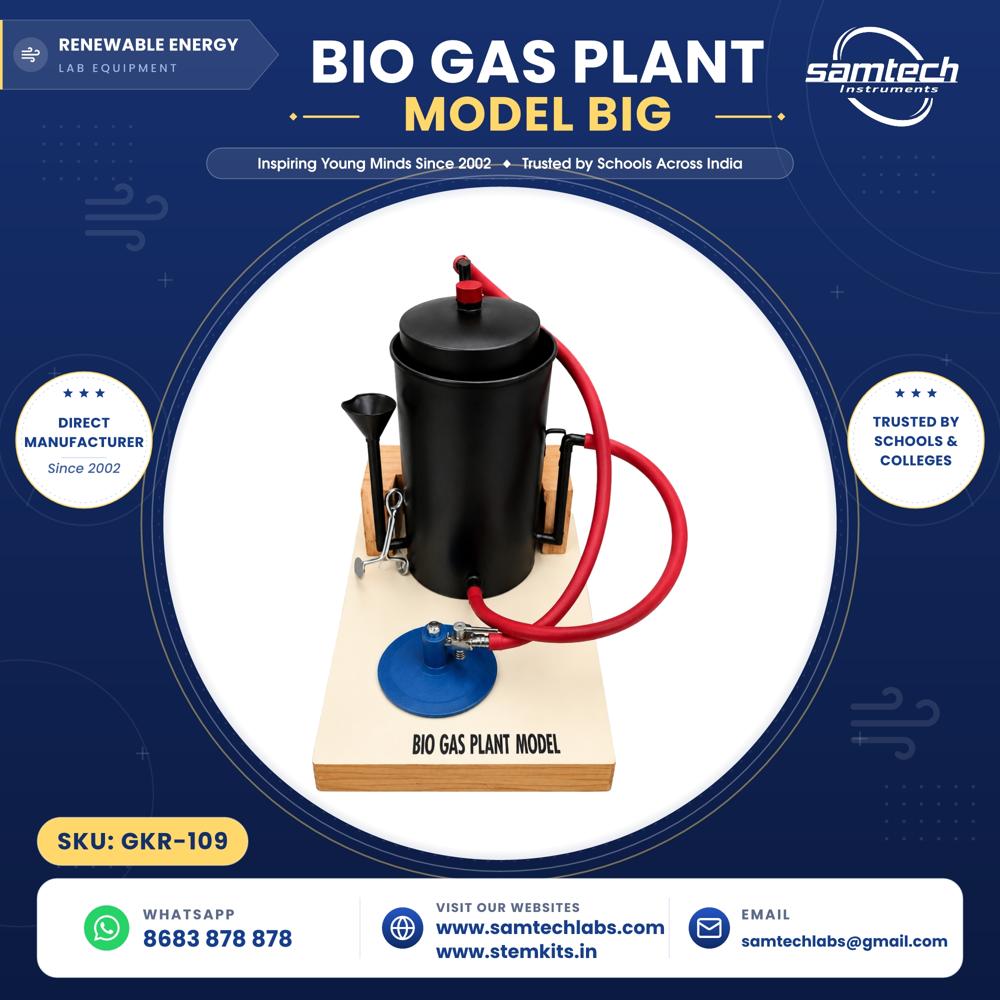
Biogas Plant Working Model (Double Chamber)
We are a leading manufacturer, supplier, and exporter of Double Chamber Biogas Plant Working Models designed for schools, colleges, science laboratories, STEM education programs, and renewable energy demonstrations. This advanced educational model demonstrates the complete process of biogas production through anaerobic digestion using a two-chamber system, providing students with a realistic understanding of modern biogas plant technology.
The model consists of two separate chambers a digestion chamber where organic waste decomposes in the absence of oxygen, and a gas collection chamber where the generated biogas is stored. The methane-rich biogas produced can be used as a renewable source of energy for heating, cooking, and electricity generation. The remaining slurry can be utilized as an organic fertilizer, making the system an excellent example of sustainable waste management and renewable energy production.
Detailed Visualization of Biogas GenerationThis educational model provides a transparent and comprehensive view of biogas plant operations, making it ideal for classroom instruction and group demonstrations. Its clear observation windows and measuring scales enable students to monitor the biogas generation process in real-time, enhancing understanding through visual, interactive learning.
Safe and User-Friendly DesignCrafted from non-toxic, corrosion-resistant materials, the Bio Gas Plant Model prioritizes safety with no open flame needed and is safe for indoor use. Its smooth, polished surfaces are easy to clean, while sturdy base handles allow for convenient mobility during demonstrations across different venues or classrooms.
Comprehensive Accessories and Simple AssemblyThe model includes all necessary components for a working demonstration-connecting tubes, demonstration slurry, and a user-friendly manual. Designed for straightforward on-site assembly, the partially assembled model can be quickly set up by educators and is suitable for trainees aged 12 and above.
FAQ's of Bio Gas Plant Model -Big:
Q: How does the Bio Gas Plant Model - Big demonstrate biogas production?
A: The model replicates the working principles of a real biogas plant by allowing users to add demonstration slurry into the working chamber. Over time, the model showcases the process of anaerobic digestion, leading to the generation and storage of biogas in the transparent chamber. This visual representation helps students understand each step of biogas creation.
Q: What are the primary applications of this educational biogas plant model?
A: This model is primarily intended for science laboratories, school and college demonstrations, and training institutes. Its design enables hands-on lessons and practical training sessions focused on renewable energy and environmental science.
Q: Where can the Bio Gas Plant Model be safely used?
A: Due to its non-toxic, flame-free design and sturdy construction, the model is perfectly safe for use indoors in classrooms, laboratories, and training centers. Its portable nature, with base handles and light weight, allows easy movement between demonstration locations.
Q: What process does the demonstration slurry go through in the model?
A: Once the demonstration slurry is added to the working chamber, it undergoes anaerobic digestion. Microbes break down organic matter in the absence of oxygen, producing biogas, which accumulates in the storage chamber. This process is observable through the transparent model walls and measuring scale.
Q: How easy is it to use and maintain the Bio Gas Plant Model?
A: The model features detachable parts, leak-proof construction, and smooth surfaces that make assembly, usage, and cleaning simple. Detailed instructions and included accessories further support easy maintenance and repeated use, ensuring a worry-free demonstration experience.
Q: What benefits does this model offer for educational purposes?
A: The Bio Gas Plant Model provides a vivid, hands-on demonstration of biogas generation, supporting both visual and experiential learning. It allows educators to convey complex scientific concepts in a practical, engaging manner while ensuring safety and reusability for multiple sessions.
 Send Inquiry



 Send Inquiry

 Send Inquiry