About Hydraulic Brake Model
Hydraulic Brake Model
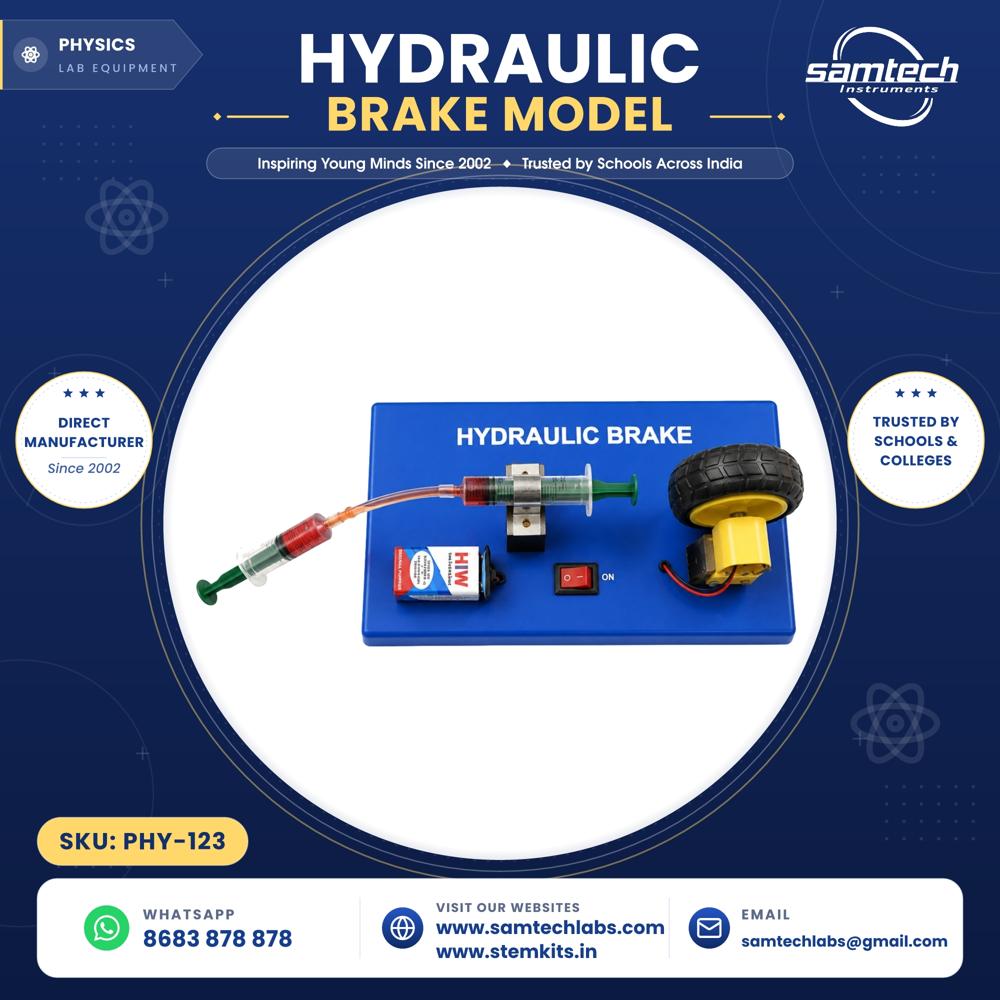
We are a leading manufacturer, supplier, and exporter of Hydraulic Brake Models, designed for physics laboratories, engineering colleges, STEM education programs, automobile training institutes, and science demonstration laboratories. This model provides a practical and visual demonstration of Pascals Law and the working principle of hydraulic braking systems used in automobiles and industrial machinery.
The Hydraulic Brake Model consists of interconnected hydraulic cylinders, transparent tubing filled with colored fluid, a wheel assembly, and a sturdy demonstration base. When pressure is applied to the master cylinder, the hydraulic fluid transmits the pressure uniformly throughout the system, causing the brake mechanism to act on the wheel. This effectively demonstrates how a small force applied at one point can generate a larger braking force at another point.
The model helps students understand the principles of fluid pressure transmission, force multiplication, and hydraulic control systems. It offers a clear and engaging way to visualize the operation of modern vehicle braking systems.
Transparent Flow VisualizationThis educational hydraulic brake model is equipped with transparent polycarbonate and acrylic sections. These visual panels permit students to observe hydraulic oil flow and pressure transmission directly, making theoretical concepts tangible and fostering a deeper understanding of hydraulic brake operations.
Robust, Stable, and Safe DesignEngineered with mild steel, aluminum, and reinforced plastics, the model provides lasting durability. Anti-skid legs keep it securely in place on laboratory tables, supporting safe and effective lessons even during active demonstrations. The blue and transparent aesthetic also aids in visibility during classroom sessions.
Precise Measurement and Modular MaintenanceEquipped with a dial analog pressure gauge-measuring up to 200 bar with 1% accuracy-it delivers reliable performance for educational use. The modular design and included spare O-rings and seals make cleaning and part replacement straightforward, which simplifies maintenance and extends the model's operational life.
FAQ's of Hydraulic Brake Model:
Q: How does the Hydraulic Brake Model demonstrate hydraulic pressure transmission?
A: The model uses transparent sections and hydraulic oil to visually show how force applied to the master cylinder is transmitted through the fluid to the hydraulic cylinder, simulating an actual brake system. Movable components and the analog pressure gauge allow users to observe and measure these changes in real-time.
Q: What educational benefits does this model provide to students?
A: This demonstration unit enables hands-on learning by letting students directly observe fluid mechanics within a hydraulic brake. The visual design enhances understanding of pressure principles, system response, and component interaction, making complex concepts easier to grasp.
Q: When should I perform maintenance on the model, and how is it done?
A: Routine maintenance is recommended after each teaching session or when residue is visible in the transparent sections. The modular design allows quick disassembly for cleaning, and replacing worn O-rings or seals is made simple with included spares and detailed instructions in the user manual.
Q: Where is the hydraulic brake model best utilized?
A: This model is specifically designed for educational settings such as engineering laboratories, polytechnic institutes, and technical training centers. Its sturdy table-top design and anti-skid legs make it ideal for classroom and laboratory demonstrations.
Q: What is the process for setting up the model for demonstrations?
A: Place the model on a flat, stable surface using the anti-skid legs. Fill the transparent reservoir with compatible hydraulic oil, connect any required electrical accessory (if provided), and refer to the user manual for operating instructions. The model is now ready for demonstration and measurement.
Q: Which hydraulic fluid should be used with the model?
A: Use hydraulic oil compatible with the materials described in the model's instructions. This ensures reliable operation and longevity of the polycarbonate, acrylic, and metal components.
Q: What are the primary advantages of using this model in educational demonstrations?
A: Key benefits include clear visualization of hydraulic principles, robust durability for repeated classroom use, straightforward maintenance, and accurate measurements. These features make it an effective and reliable teaching tool for understanding hydraulic braking systems.
 Send Inquiry



 Send Inquiry

 Send Inquiry