Turbojet Engine Model About
Turbojet Engine Model
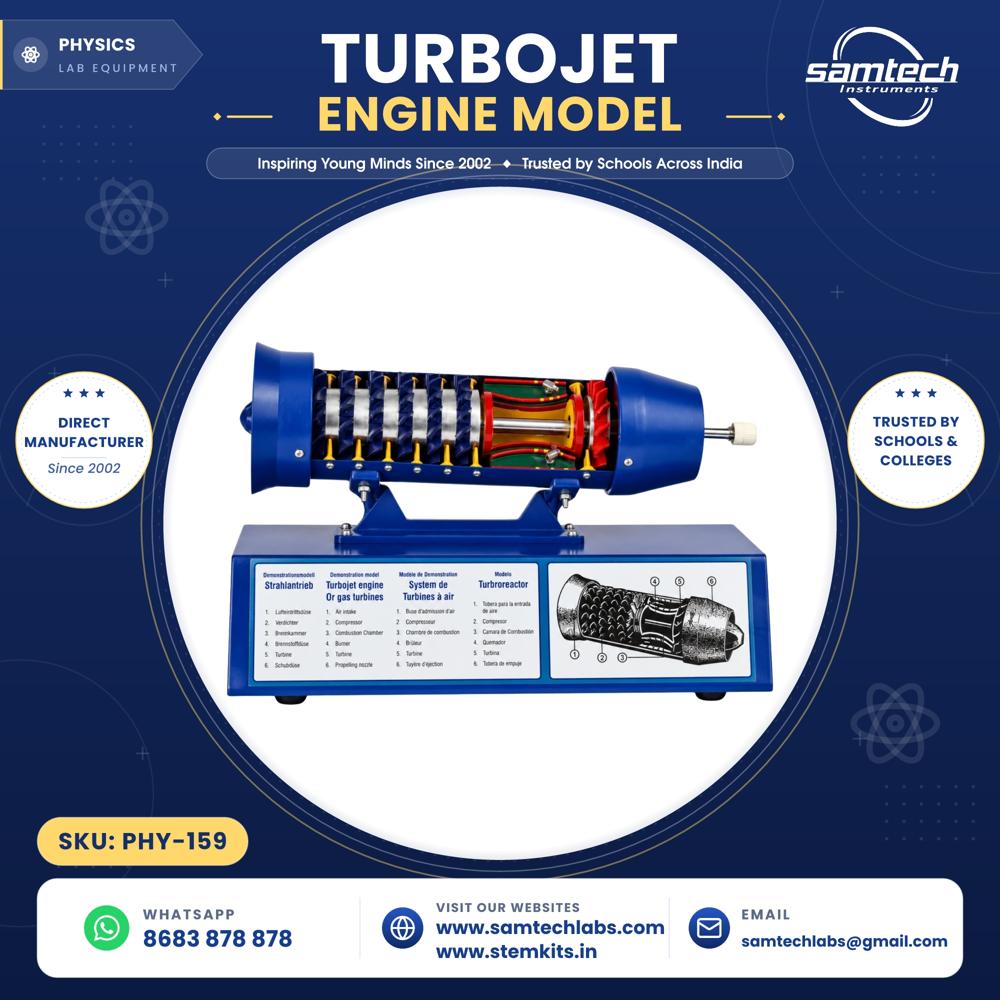
The Turbojet Engine Model is a precision cut-section educational model designed to demonstrate the construction and working principles of a turbojet engine. It provides a clear view of the internal components, making it an excellent teaching aid for understanding aircraft propulsion systems and gas turbine technology.
Engage with Realistic Engine DemonstrationThis cutaway turbojet engine model provides learners a tangible, hands-on means to study jet propulsion principles without operational risk. Its multi-color, labeled components offer exceptional clarity, while the transparent housing and safety features ensure all internal mechanisms remain both visible and protected during demonstrations. The model is sized for benchtop use and integrates seamlessly into engineering educational settings.
Designed for Educational VersatilityBuilt for mechanical and aerospace engineering curricula, this pre-assembled model is ideal for laboratory instruction, training, and classroom demonstrations. The ease of disassembly encourages direct engagement, enabling students to explore core turbojet components including compressor, combustion chamber, turbine, and nozzle. Labelled diagrams and comprehensive manuals further support instructional clarity.
FAQ's of Turbojet Engine Model:
Q: How can the Turbojet Engine Model be integrated into mechanical and aerospace engineering courses?
A: The model is specifically designed for education, making it ideal for hands-on laboratory sessions, demonstrations, and practical examinations within mechanical and aerospace engineering courses. Its labelled diagrams and transparent casing facilitate direct observation and explanation of turbojet principles.
Q: What is the primary benefit of using this turbojet engine model for instruction?
A: The main advantage lies in its cutaway design and transparency, which provide clear visibility of internal mechanisms and component interactions in real time, fostering a deeper understanding of turbojet operations without the risks or complexity of live engines.
Q: When should the model be used during a curriculum?
A: The model is best introduced when teaching jet engine theory, thermodynamics, or air-breathing propulsion, usually after basic engine concepts are covered, to reinforce learning with physical demonstration and assembly practice.
Q: Where is it recommended to install or use the engine model?
A: Usage is recommended indoors, in dry laboratory or classroom environments with benchtop space available. The unit is designed for stable, safe demonstration away from moisture or outdoor elements.
Q: How is the drive mechanism operated in this model?
A: The model can be driven manually via a hand crank, or electrically using a 220V AC motor (where fitted), allowing for flexibility in demonstration methods and ease of use based on instructional needs.
Q: What safety features are included with the turbojet model?
A: Safety shields enclose all moving parts, and the model is static (non-functional as a powered engine). Its robust acrylic casing ensures that observers and users are protected from accidental contact with internal components during use.
 Send Inquiry




 Send Inquiry

 Send Inquiry