About Diesel Engine Model Four Stroke
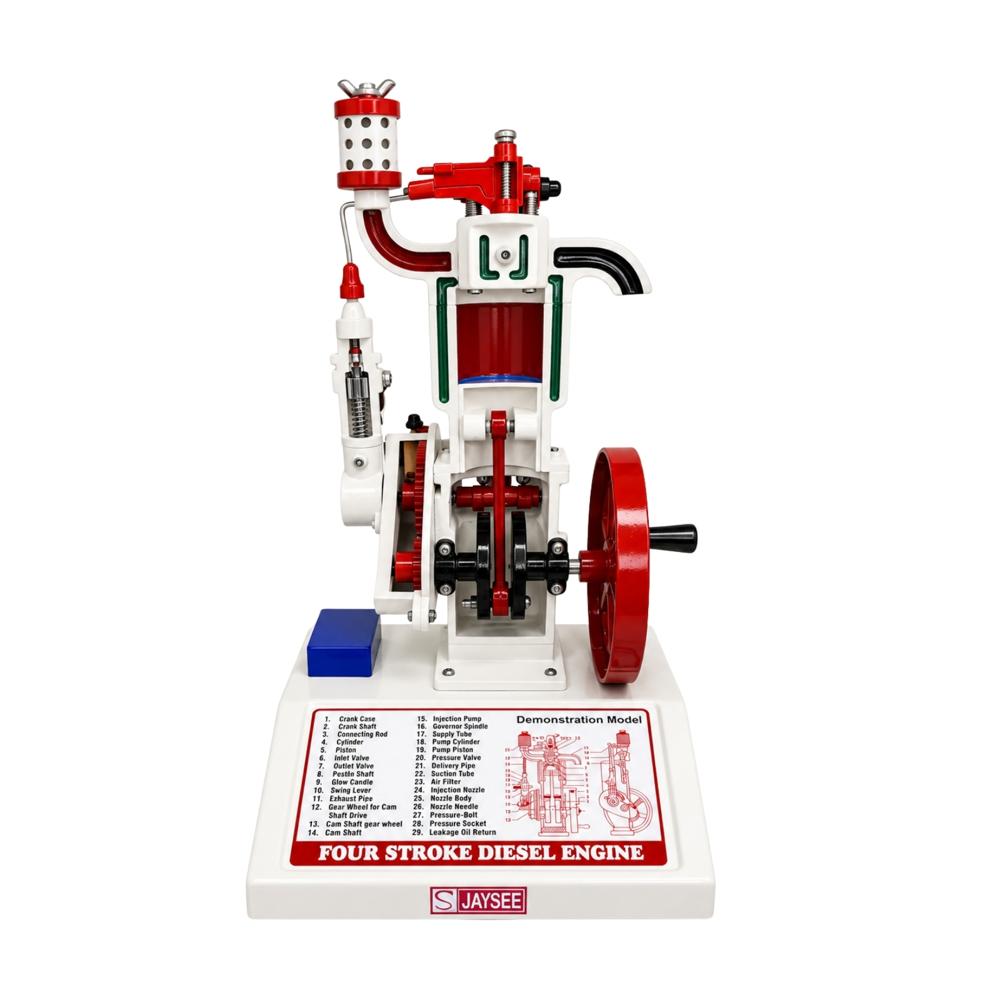
Four Stroke Diesel Engine Model
We are a leading manufacturer, supplier, and exporter of Four Stroke Diesel Engine Models designed for mechanical engineering laboratories, engineering colleges, polytechnic institutes, vocational training centers, and technical education programs. This cut-section educational model helps students understand the construction, components, and working cycle of a four-stroke diesel engine through practical demonstration.
The Four Stroke Diesel Engine Model clearly illustrates the intake, compression, power, and exhaust strokes of a diesel engine. The model features moving components that allow students to observe the interaction between the piston, crankshaft, connecting rod, camshaft, valves, fuel injection system, and flywheel. The ignition light and glow plug can be activated using a 1.5V AA cell, providing an enhanced learning experience.
Manufactured from durable cast alloys and ABS plastic, this model is built for years of classroom and laboratory demonstrations.
Comprehensive Learning ToolThe Four-Stroke Diesel Engine Model serves as an effective hands-on teaching aid, making complex engine operations accessible to students at various educational levels. Its detailed internal mechanisms and color-coded parts provide clear visualization of engine cycles, helping learners grasp principles such as valve timing, piston movement, and fuel injection processes.
Engineered for Durability and SafetyBuilt with a corrosion-resistant finish and metal alloy body, this model promises longevity under regular instructional use. Rubber feet ensure it remains stable on laboratory benches, and each unit arrives carefully boxed to prevent damage during transport.
Manual Operation for Interactive DemonstrationWith a simple hand crank, educators and students can manually operate the single-cylinder engine, cycling through intake, compression, power, and exhaust strokes. This interactive approach fosters deeper understanding by enabling real-time observation of each mechanical phase, all without requiring electricity.
FAQ's of Diesel Engine Model Four Stroke:
Q: How does the Four-Stroke Diesel Engine Model demonstrate engine cycles?
A: This model uses a manual crank handle to simulate all four strokes-intake, compression, power, and exhaust-allowing users to observe piston movement and valve operations through sectional views and transparent windows. It accurately represents real engine cycles for educational understanding.
Q: What educational benefits does the model provide?
A: The model supports hands-on learning for mechanical and automobile engineering studies by allowing direct observation of engine mechanism functions, component coordination, and valve timing, making theoretical concepts easier to grasp during classroom or laboratory demonstrations.
Q: When is maintenance required for this model?
A: Minimal maintenance is necessary. Simply dust the model occasionally to keep viewing windows and painted surfaces clean. Its corrosion-resistant, painted finish and sturdy construction are designed for regular classroom and laboratory use.
Q: Where can the Four-Stroke Diesel Engine Model be used effectively?
A: This engine model is suitable for use in schools, colleges, technical institutes, and engineering labs. Its bench-top mounting and stable rubber feet ensure safe demonstration on flat surfaces in educational environments.
Q: What is the process for using the model during demonstrations?
A: Place the model securely on a bench, ensure all components are visible, and use the hand crank to operate the engine. As you turn the crank, students can observe how the piston, valves, and injection system interact, providing a clear view of the four-stroke process.
Q: What are the main components included in the model?
A: Core components include a piston, crankshaft, valves, connecting rod, cylinder, fuel injector, and camshaft. All are color-coded and visible through observation windows to facilitate learning about each part's role in the engine cycle.
Q: How does the manual operation of the model benefit classroom instruction?
A: Manual crank operation enables interactive demonstrations, making it easier for students to visualize motion and mechanical relationships within the engine without the complexity or safety concerns of powered engines.
 Send Inquiry






 Send Inquiry

 Send Inquiry